How Much Does It Cost to Find a Septic Tank in Texas?
Septic tank locating cost runs $100 to $900 in one national cost guide, with a national average of $400. A second national guide says hiring a company to find your tank usually costs $100 to $450.
A Texas-focused cost guide puts a locate-only visit at $100 to $300. On a pumping visit, it lists an extra $50 to $150 if the lid has to be dug up. These are market numbers, not our price list.
The first step is often paperwork, because the county permit file may already show where the tank sits. Our septic tank locating page covers how we find a buried tank and open its lids.
What do cost guides say septic tank locating costs?
The table pulls the locating lines from three national guides and one Texas-focused guide. Your own job can land higher or lower.
| What the guide prices | Published range |
|---|---|
| Professional locating, one national guide | $100 to $900, with a $400 national average |
| Hiring a company to find the tank, a second national guide | Usually $100 to $450 |
| Locate-only visit, a Texas-focused guide | $100 to $300 |
| Digging for the lid on a pumping visit, same Texas guide | An extra $50 to $150 |
| Uncovering the tank during an inspection, a third national guide | An extra $50 to $250, varying with tank depth |
| Hourly billing, the first national guide | $100 to $300 per hour, where a company bills hourly |
Why the spread? The second guide says the price depends on the labor and equipment the job takes. The first ties it to depth, since tanks buried closer to four feet down are much harder to find. The more searching and digging a job takes, the higher it lands in the range.
Does a locate cost less during a pump-out?
Often, yes. The Texas-focused guide says most Texas septic companies include tank locating as part of a standard pumping call. Digging for the lid adds the extra $50 to $150.
One national guide gives the same tip: have the company find the tank when they come to pump it. The lids have to come open for the pump-out either way. Locating and opening the lids is the first step of our septic tank pumping visit.
The EPA says household septic tanks are typically pumped every three to five years. So the lids come open on a schedule, and knowing where they are pays off at every visit. Our guide to septic tank pumping cost covers the pump-out side of the bill.
How do pros locate a septic tank?
A search usually follows the sewer line out from the house. One national guide describes a soil probe as a long, thin metal rod with a pointed tip. Pushed into the ground along the line, the rod stops when it meets the tank.
Guides also describe gear some companies bring. An electronic locator sends a signal through the pipe and detects it above ground. Ground-penetrating radar scans the ground for underground structures.
Our method is the probe and the paperwork. We start at the sewer cleanout and probe from there. We also pull the county permit record, which often includes a site drawing.
What moves the price of finding a septic tank?
A drawing on file. When the county file holds the system drawing, the search starts close to the tank. One guide notes that older properties may not have the tank on public record.
How deep the lids sit. A deep lid means more digging. Older tanks may have no risers, so their lids can sit well below the grass. One national guide prices uncovering a tank during an inspection at an extra $50 to $250, varying with depth.
How many lids. Texas puts an inspection or cleanout port over each inlet and outlet device. Each port is its own opening to find and dig out.
What sits on top. Rock, roots, a deck or a concrete slab over the tank all slow the dig. Around Leander, much of the ground west of I-35 is shallow rock. Much of the ground east of it is heavy clay.
How the visit is billed. Some companies bill by the hour, and one guide lists $100 to $300 per hour. A locate done on a pumping visit shares one trip with the pump-out.
What can you check before anyone digs?
Start with the permit file. Under 30 TAC 285.5, a septic permit application includes a scale drawing of the system and the buildings it serves. That drawing stays in the file at the office that permitted your system.
In Williamson County, the County Engineer’s Office runs the septic program outside Austin city limits. Its OSSF department takes open records requests by email, or in person at its office. An emailed request needs your contact details, the full property address and a description of what you want.
In unincorporated Travis County, the county’s Transportation and Natural Resources department handles septic permits. Around Lake Travis, the LCRA permits systems in its lake zones. Older systems, and any put in without a permit, may have no drawing on file at all.
If you are buying the house, the permit record pull is part of our real estate septic inspection. Your own papers can help too. One guide notes that inspection paperwork might contain a sketch of the system.
How do you find your septic tank?
Start at the cleanout, a capped pipe near the foundation. One Texas guide says that cap marks the sewer line. A national guide says you can usually track the line by walking straight away from the house. The same guide says the tank is usually 10 to 25 feet away.
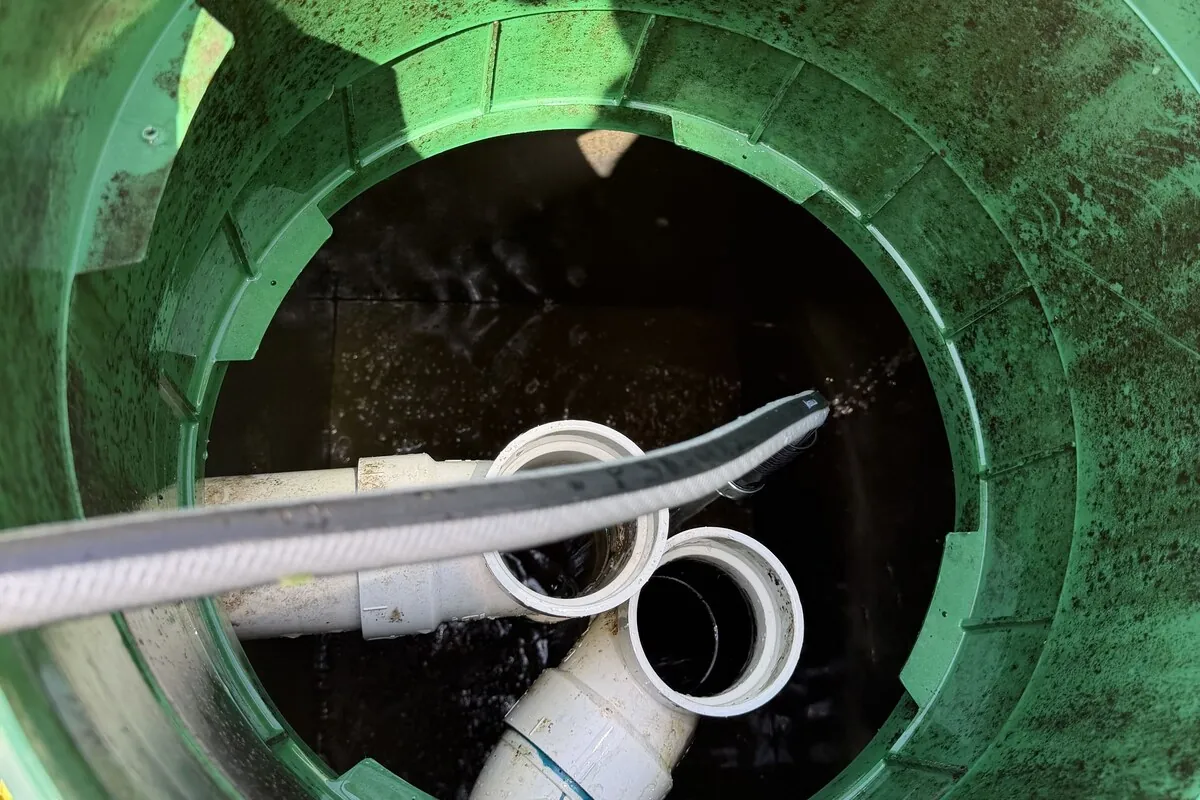
Under Texas rules, each port opening on the tank top is at least 12 inches across. On a tank built with risers, those openings sit within six inches of the ground.
Leave the digging to a pro. One guide warns that digging in the wrong spot can lead to costly damage. First-time septic owners get walked through where the lids are once we find them.
Is a cracked or missing septic tank lid dangerous?
Yes, so leave any lid you find closed. One guide calls a broken lid a safety hazard and warns against prying it open yourself. A cracked or missing lid is a fall hazard.
Replacing tank lids is on the state’s emergency repair list under 30 TAC 285.35. Keep people and pets away from a damaged lid and call (512) 887-4458. Urgent problems get priority on the schedule.
Why do risers end the search?
A riser brings the lid opening up near the surface. Texas requires risers on any septic tank buried more than 12 inches below the ground. They run from the tank surface to no more than six inches below the ground.
Once risers are in, there is no more digging at every pump-out. We can add risers and secure lids while the tank is open for a pump-out. Our guide to septic tank riser and lid cost covers the market numbers. The work itself is on our risers and lids page.
How do you get a septic tank located around Leander?
Published ranges show the market, and your yard sets your number. Owners call us when they are not sure where their tanks are. We have found those tanks and pumped them.
You get a quote before any work begins. The quoted price is the price you pay for the quoted scope. Bravo Septic is based in Leander. We work Williamson County, north and northwest Travis County and the north shore of Lake Travis.
See how a locate runs on our septic tank locating service page. To book one, call (512) 887-4458.