How Do You Maintain a Septic Tank in Texas?
Pump the tank every three to five years. Have the system inspected at least every three years. Watch what goes down the drain, and keep weight and extra water off the drainfield. That is the whole job on a conventional system. The Texas Commission on Environmental Quality (TCEQ) publishes that range, and so does the EPA.
Your tank size, household size and habits set the real date. Every figure below traces to TCEQ, the EPA or Texas AgriLife Extension.
How Often Should You Pump Your Septic Tank?
TCEQ says a conventional septic tank should be pumped every three to five years. The EPA says the same, and adds an inspection at least every three years. The EPA lists four things that move that date. They are household size, total wastewater generated, volume of solids, and tank size.
TCEQ publishes a planning table and Texas AgriLife Extension prints the same numbers. It shows years between pump-outs or inspections by tank and household size.
| Tank size (gallons) | 1 person | 2 people | 3 people | 4 people | 5 people | 6 people |
|---|---|---|---|---|---|---|
| 750 | 9.1 | 4.2 | 2.6 | 1.8 | 1.3 | 1.0 |
| 1,000 | 12.4 | 5.9 | 3.7 | 2.6 | 2.0 | 1.5 |
| 1,500 | 18.9 | 9.1 | 5.9 | 4.2 | 3.3 | 2.6 |
Source: TCEQ and Texas AgriLife Extension (ESC-015).
Treat the table as a plan, not a promise. AgriLife says a house with a garbage disposal may need pumping one to two years sooner. The EPA warns that solids migrate out of a full tank and can clog the drainfield. That is what regular septic tank pumping prevents. Our guide to what a pump-out costs in Texas covers the market ranges.
What Are the Signs a Septic Tank Is Full?
The EPA lists these signs of a failing system:
- Sewage from toilets, drains and sinks backing up into the home’s plumbing
- Tubs, showers and sinks draining very slowly
- Gurgling sounds in the plumbing
- Standing water, damp spots or sewage odors over the tank or drainfield
- Bright green, spongy grass over the tank or drainfield in dry weather
The measured answer is inside the tank. The EPA says to pump when any of these is true:
- The bottom of the scum layer is within six inches of the bottom of the outlet
- The top of the sludge layer is within 12 inches of the outlet
- More than 25 percent of the liquid depth is sludge and scum
AgriLife draws the scum line tighter, at three inches below the outlet device. It also says to pump once scum and sludge together reach one fourth to one third of the tank volume. A septic inspection measures both layers and gives you a real date for the next pump-out.
What Should You Never Flush or Pour Down the Drain?
The EPA’s rule of thumb is to flush nothing but human waste and toilet paper. Its never-flush list:
- Cooking grease or oil
- Non-flushable wipes, including baby wipes
- Feminine hygiene products, condoms, dental floss and diapers
- Paper towels, cat litter, cigarette butts and coffee grounds
- Pharmaceuticals and chemicals like gasoline, pesticides, antifreeze and paint
At the sink, the EPA says to skip chemical drain openers and use boiling water or a drain snake. Limit the garbage disposal, because food waste adds fats, grease and solids that can clog the field.
How Does Water Use Affect a Septic System?
Every gallon you send down a drain lands in the septic system. The EPA puts average indoor use at as much as 70 gallons per person per day. One leaky or running toilet can add as much as 200 gallons a day.
High-efficiency toilets use 1.6 gallons per flush or less, against 3.5 to 5 gallons in older homes. Spread laundry through the week. The EPA says every load in one day does not give the tank time to treat the waste. To catch a silent toilet leak, TCEQ suggests adding dye to the tank and checking the bowl ten minutes later.
How Do You Protect the Drainfield?
Keep weight off it. The EPA says do not park or drive on the drainfield. TCEQ lists driveways, barns, storage buildings, sidewalks and patios as things not to build over the system.
Keep extra water off it. The EPA says to keep roof drains, sump pumps and other rainwater drainage away from the field. Excess water slows down or stops treatment. Its landscaping sheet also says to clear the field of underground sprinkler lines, decks, patios and sheds.
Keep roots out of it. The EPA says tree and shrub roots grow into drain lines, clogging and breaking them. AgriLife recommends grass over the field instead.
Do Septic Tank Additives Work?
No. The EPA says additives with bacteria or chemicals are marketed to improve performance. It does not recommend them for domestic wastewater treatment. They can be ineffective or even harm the system and the environment.
AgriLife says a septic tank does not need chemical or biological additives, and that some may harm it. TCEQ lists them as something not to do.
What About the Effluent Filter and Record Keeping?
If your tank has an effluent screen, AgriLife says to have it cleaned every year or two. A plugged filter can back up the house while the tank is still fine.
AgriLife notes that a riser allows quick access for maintenance, so solids can be checked without digging. See our page on septic tank risers and lids.
Keep the paperwork. The EPA says to keep maintenance records and to write down the sludge and scum levels the service provider finds. Two readings a few years apart give you your own interval.
What Does Central Texas Do to a Septic System?
East of I-35 the Blackland Prairie clay runs deep. The USDA description of Houston Black, a Blackland Prairie clay, rates its permeability very slow and its shrink-swell high. It cracks up to four inches wide in dry periods. Water enters rapidly when the soil is dry and cracked, and very slowly once it is moist.
West of I-35 the problem flips. TCEQ calls the Edwards Aquifer a karst aquifer. Fractures, caves, sinking streams and sinkholes act as conduits from the surface. AgriLife warns that shallow soil over fractured rock or karst limestone may not treat wastewater enough before it reaches groundwater.
Both sides feel a hard rain after a dry spell. AgriLife says a septic system is designed to manage a specific amount of water. Rainwater can fill it and leave no room for wastewater. The tank that was already overdue is the one that backs up the week the drought breaks.
What Does Texas Require if You Have an Aerobic System?
An aerobic system carries duties a conventional tank does not. Texas requires it to stay under maintenance, normally through a licensed maintenance provider. TCEQ says the contract must be with a licensed provider. A system using secondary treatment or drip irrigation is inspected every four months. A report goes to the permitting authority and the owner at least that often. The rule is 30 TAC 285.7.
Two years after the unit is installed, TCEQ allows a single family homeowner to take that over. Some permitting authorities require training or do not allow it at all. In Williamson County the OSSF program is run by the Williamson County Engineer’s Office, so ask there first.
A licensed maintenance provider holds that contract and files those reports. What an aerobic system still needs from a pump truck is the tank emptied. AgriLife says an aerobic unit is typically pumped every two to three years. TCEQ says the interval depends on sludge depth and the manufacturer’s recommendations.
Who Handles Septic Maintenance Around Leander?
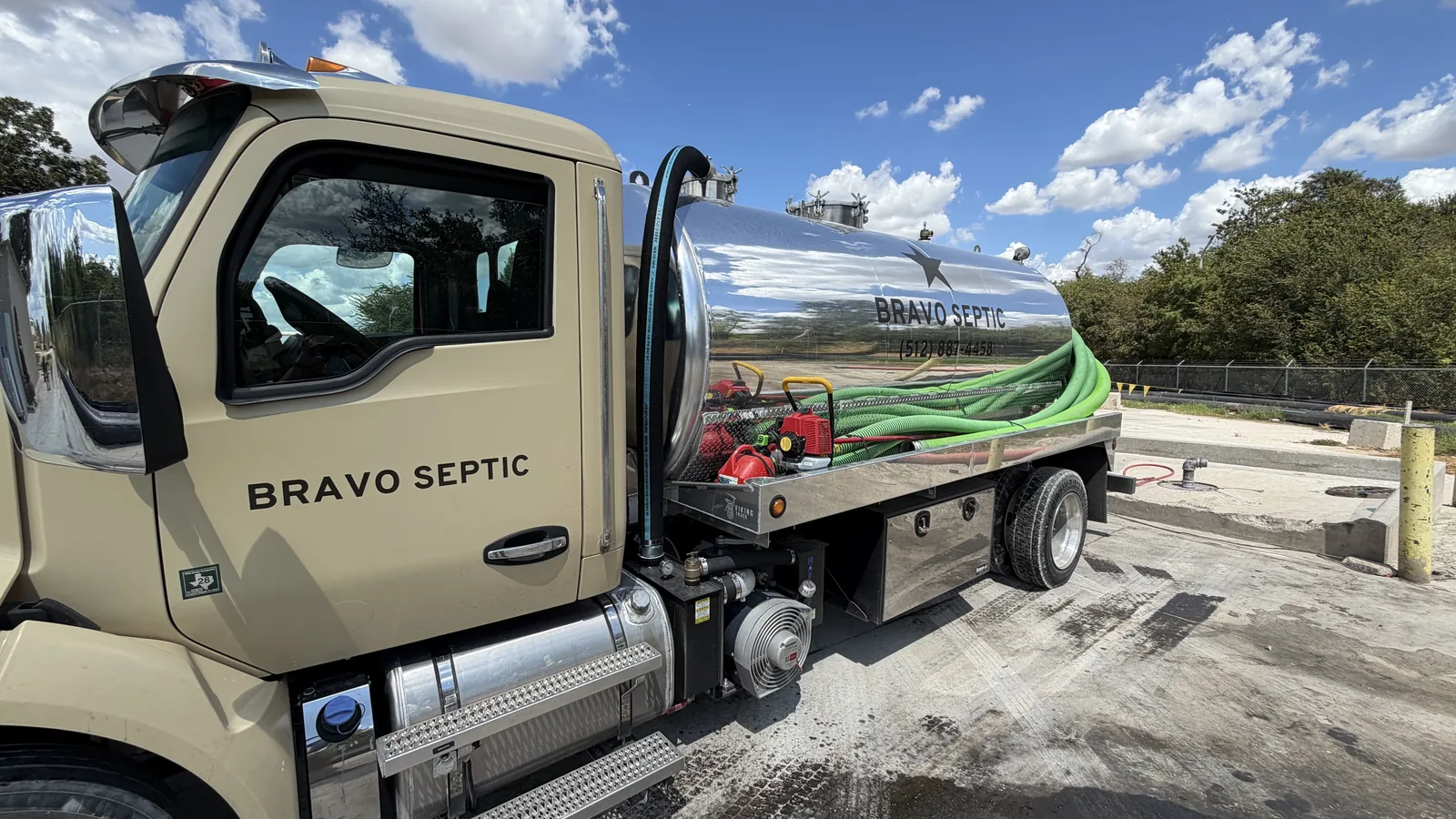
Bravo Septic is based in Leander. We work Williamson County, north and northwest Travis County and the north shore of Lake Travis. We pump septic tanks as a TCEQ-registered sludge transporter and run inspections. We handle septic repair when a baffle, filter, lid or line has failed. You get a quote before any work begins. Call or text (512) 887-4458.